
Gifts for people with dementia: ideas for every stage
What do you give someone living with dementia? Ideas for each stage, for home and for a care home, with or without a doll, plus a few things best avoided.
Gift ideas by stage and living situation
A good gift suits what someone can still do and still enjoys. Some ideas belong to a particular stage of dementia, others work at any stage; the stages overlap, and everyone is different.
In the early stage: making everyday life easier
Early on, many people with dementia still live fairly independently and notice that some things are getting harder. Gifts that make daily life simpler without being patronising often go down well. One example is a day clock that shows the day and date in large letters; another is a phone with big photo buttons for the most important numbers. Supplies for a familiar hobby work too, such as wool for someone who has always knitted, or spring bulbs for a window box.
In the middle stage: something for the hands
As conversation becomes harder, things to touch and handle matter more. Fidget blankets with buttons, zips and ribbons are often used in dementia care; some families sew their own from old clothes. A basket of towels to fold or a cushion made from different fabrics also gives the hands something to do. What matters is that there is no wrong way to do it. For ideas on spending time together with a doll, see our guide Activities for older people with a doll.
In the later stage: closeness and touch
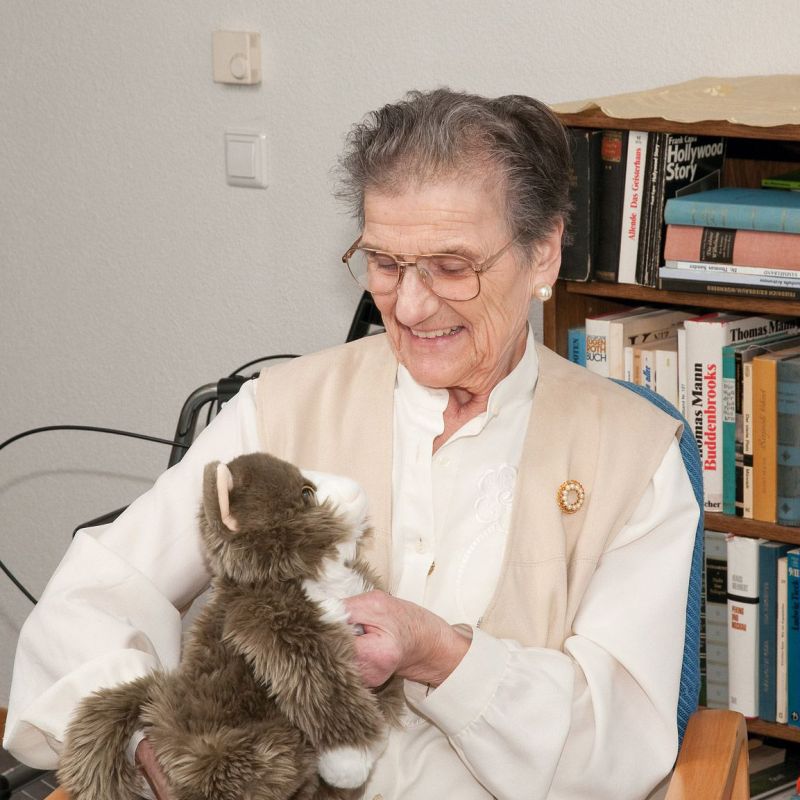
When dementia is very advanced, soft fabrics, familiar scents and physical contact matter most. A cosy blanket or a soft toy animal to hold can be a good choice. A hand cream in a scent the person has always liked is another idea, with a slow hand massage to go with it. Empathy dolls are also used in care at this stage.
Time together
What many people want most cannot be wrapped: time. A walk along a familiar route, an afternoon in a favourite café, baking together from an old family recipe. Vouchers for these are well meant but easily forgotten. It is better to arrange a fixed date and keep it in your own diary, or simply to spend the time together on the birthday or special day itself.
A memory album
A photo book with pictures from the person’s life, such as their wedding, their children, their first car or a favourite holiday spot, gives them something to talk about. Write clearly under each picture who is in it and where it was taken. That way nobody has to ask ‘Do you remember who this is?’, which can easily feel like a test. Use prints or copies rather than originals, especially if the album is going to a care home. A memory box with objects from someone’s working life or home is an alternative to an album.
Music from their youth
Many people still know the songs of their youth by heart well into old age. Put together a selection of the person’s favourite music and give it along with a player that needs only a single button. Smartphones and streaming services are often too fiddly: the simpler the device, the more likely it is to be used.
Christmas gifts for someone with dementia
Christmas is often busy: visitors, lights, songs, a full table. One or two presents are plenty, and they should be easy to open, for example in a gift bag rather than paper with lots of sticky tape. Afterwards, take time to enjoy the gift together: leaf through the memory album, listen to an old carol and sing along, introduce a doll at a calm moment. If the person lives in a care home, an extra visit on a quieter day between Christmas and New Year can be lovely.
At home or in a care home
At home there is usually room for something bigger, such as a raised bed on the balcony or a comfortable armchair by the window. In a care home, rooms are usually small and things can go missing or end up in someone else’s room, so label gifts with the person’s name. Before giving anything electrical, check with the home, as many homes have such items tested before first use. If you give a doll or a soft toy, a quick word with the care team lets everyone know what it means to the person.
What is best avoided
Quizzes, brain teasers and memory games that test knowledge often highlight what the person can no longer do. Gadgets with menus, apps or passwords tend to go unused. Small parts, and decorations that look like sweets, are risky if someone puts things in their mouth. With jigsaws and picture books, look for editions designed for adults rather than children; some people find childish images demeaning.
A doll or a soft toy for someone with dementia
Whether a doll or a soft toy makes a good gift depends entirely on the person.
Baby, child or animal?
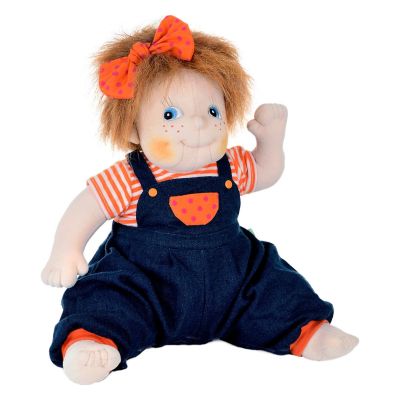
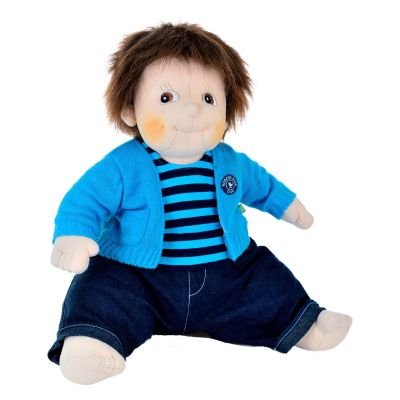
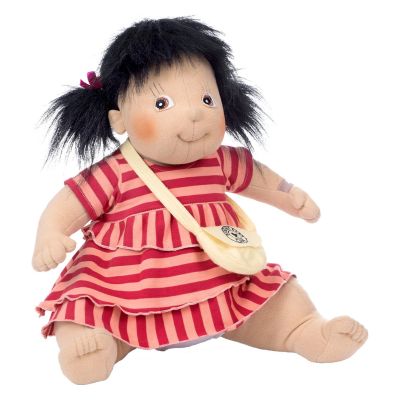
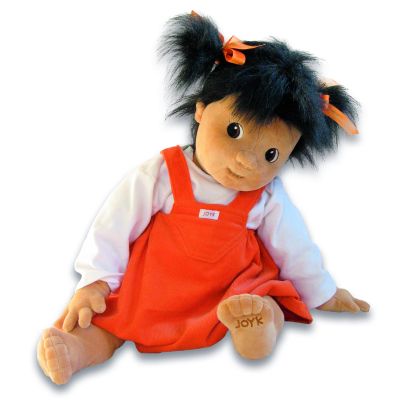
People who raised children of their own often like a doll that looks like a baby. The Original dolls from Rubens Barn are weighted with granules at the base, so they lie in someone’s arms like a baby. Rubens Barn also designs them with doll therapy in elderly care in mind. Joyk child dolls such as Emelie or Ingrid represent children aged around three to six and have a noticeable weight to them. Someone who once had a cat or a dog may prefer an animal doll.
Rubens Barn Original →Joyk empathy dolls →What to look for in a soft toy
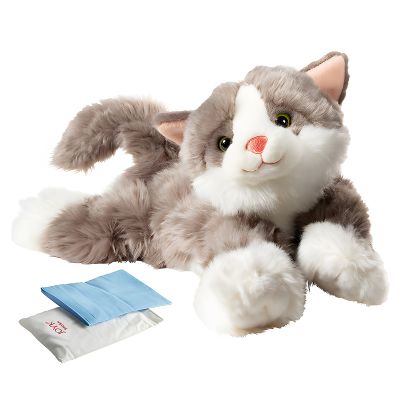
A soft toy for someone with dementia should feel pleasant, fit nicely in the arms and be washable. Joyk’s animal dolls, Billy the cat and Brando the dog, also have an opening in the body. A bag of granules comes with each one and can be put inside, so the animal rests on someone’s lap with a noticeable weight. The same opening lets you use the animal as a hand puppet.
Offering a doll gently
For someone who has lost a child, a baby doll may bring back painful memories, so it is worth knowing their life story first. Don’t hand someone a doll saying ‘Here, something to play with’. Instead, place it within reach, say on the armchair or on a chair at the table, and wait. Some people pick it up straight away, others ignore it or turn it down; any of these reactions is fine. If the person talks to the doll as if it were a child, don’t correct them, and don’t simply take the doll away.
Advice for families and care settings
Wondering which doll or soft toy would suit your mother, your father or someone in the care setting where you work? Give us a call or write to us using the contact form. Care homes and medical practices can also pay by invoice; we check the customer account first and then activate this option.
Dolls and animals as gifts
Animals and child dolls from Joyk, plus the baby-like Original dolls from Rubens Barn.



Read on and browse
More guides, and dolls by brand.